We Are Gender-Neutral Brand We Are Gender-Neutral Brand We Are Gender-Neutral Brand We Are Gender-Neutral Brand We Are Gender-Neutral Brand We Are Gender-Neutral Brand We Are Gender-Neutral Brand We Are Gender-Neutral Brand We Are Gender-Neutral Brand We Are Gender-Neutral Brand We Are Gender-Neutral Brand

Ayurvedic Hair Tonic vs Commercial Hair Serums: An Honest Comparison

Your Hair Serum Might Be Doing More Harm Than Good

You’ve seen the ads. A celebrity flips impossibly shiny, frizz-free hair. You buy the serum. For two weeks, your hair looks great. Then comes the buildup — heavy, limp strands, scalp congestion, and hair fall that wasn’t there before. Sound familiar? You’re not alone.

A survey by the International Society of Hair Restoration Surgery found that 1 in 3 Indian women who use commercial hair serums regularly report increased hair thinning within 6 months of use. The culprit? Silicones, synthetic polymers, and alcohol-based carriers that coat the hair shaft temporarily but dry it out and clog follicles over time.

So what’s the alternative? Ayurvedic hair tonics — formulations rooted in 3,000 years of trichological wisdom — are making a comeback. And the results, both anecdotal and scientific, are genuinely impressive. This is the honest, no-sponsored-bias comparison you have been looking for.

“Silicone-based serums give the illusion of healthy hair by coating each strand. Ayurvedic tonics actually build hair health from the follicle up — it takes longer, but it lasts.”

The Ayurvedic Approach to Hair Health

In Ayurveda, hair fall (Khalitya) is primarily linked to excess Pitta dosha — the heat element that governs metabolism and transformation. Summer aggravates Pitta, which is precisely why hair fall peaks in April through June across India. The Ayurvedic solution? Cooling, nourishing herbs that calm scalp inflammation, strengthen roots, and stimulate natural growth cycles.

Modern trichology is increasingly validating this approach. A 2023 study in the Journal of Cosmetic Dermatology found that Bhringraj (Eclipta alba) extract stimulated hair growth in 82% of participants over 12 weeks — comparable to 2% Minoxidil but without side effects. Similarly, Brahmi has been shown to increase hair shaft diameter, and cinnamon bark extract demonstrates proven antimicrobial and circulation-boosting properties for the scalp.

These are not mere kitchen remedies — they are clinically studied, bioactive compounds that work at the root level.

Head-to-Head: Ayurvedic Hair Tonic vs Commercial Hair Serum

Round 1: Ingredients

Commercial Serums:Typically lead with Cyclopentasiloxane, Dimethicone, and Phenyl Trimethicone — silicone polymers that create shine and smoothness by coating the hair. Many also contain alcohol (Denat. Alcohol) which is drying long-term, and artificial fragrances that can irritate the scalp.

Ayurvedic Hair Tonic:Leading ingredients include Bhringraj, Brahmi, Amla, Neem, and herbal carriers like sesame or coconut oil. These penetrate the cortex of the hair shaft and nourish from within, rather than coating the surface.

Winner: Ayurvedic Tonic. Surface coatings mask damage; herbal ingredients repair it.

Round 2: Results Timeline

Commercial Serums:Immediate results — hair looks smoother and shinier within minutes. However, this is a cosmetic effect, not a structural one. Buildup begins after 3–4 weeks, often requiring clarifying shampoos.

Ayurvedic Hair Tonic:Results build over 4–8 weeks as herbs strengthen follicles, reduce scalp inflammation, and improve circulation. The results are structural — less breakage, reduced fall, visibly thicker strands over time.

Winner: Serum for instant results; Tonic for lasting results. Use both strategically.

Round 3: Hair Fall Control

Commercial Serums:Most serums offer zero addressing of hair fall causes. They are styling and shine products. Some contain biotin or keratin, which strengthen the shaft but don’t address follicular health.

Ayurvedic Hair Tonic:Directly addresses the root causes of hair fall — scalp inflammation, poor circulation, DHT sensitivity, and nutritional deficiency at the follicular level. Bhringraj is the gold standard here.

Winner: Ayurvedic Tonic, by a significant margin.

Round 4: Frizz Control in Indian Humidity

Commercial Hair Spray / Serum:Highly effective for same-day frizz control. Humidity-resistant polymers form a barrier that keeps hair smooth in Indian monsoon and summer conditions.

Ayurvedic Approach:Consistent tonic use + a light Ayurvedic hair spray combination manages frizz naturally. Takes more time but avoids the brittle ends and scalp congestion that commercial sprays cause with daily use.

Winner: Tie — use an Ayurvedic Instant Hair Spray for daily frizz control alongside a tonic for long-term health.

The Smart Routine: Use Both, Strategically

You don’t have to choose one or the other. The optimal hair care routine for Indian summers combines the best of both worlds:

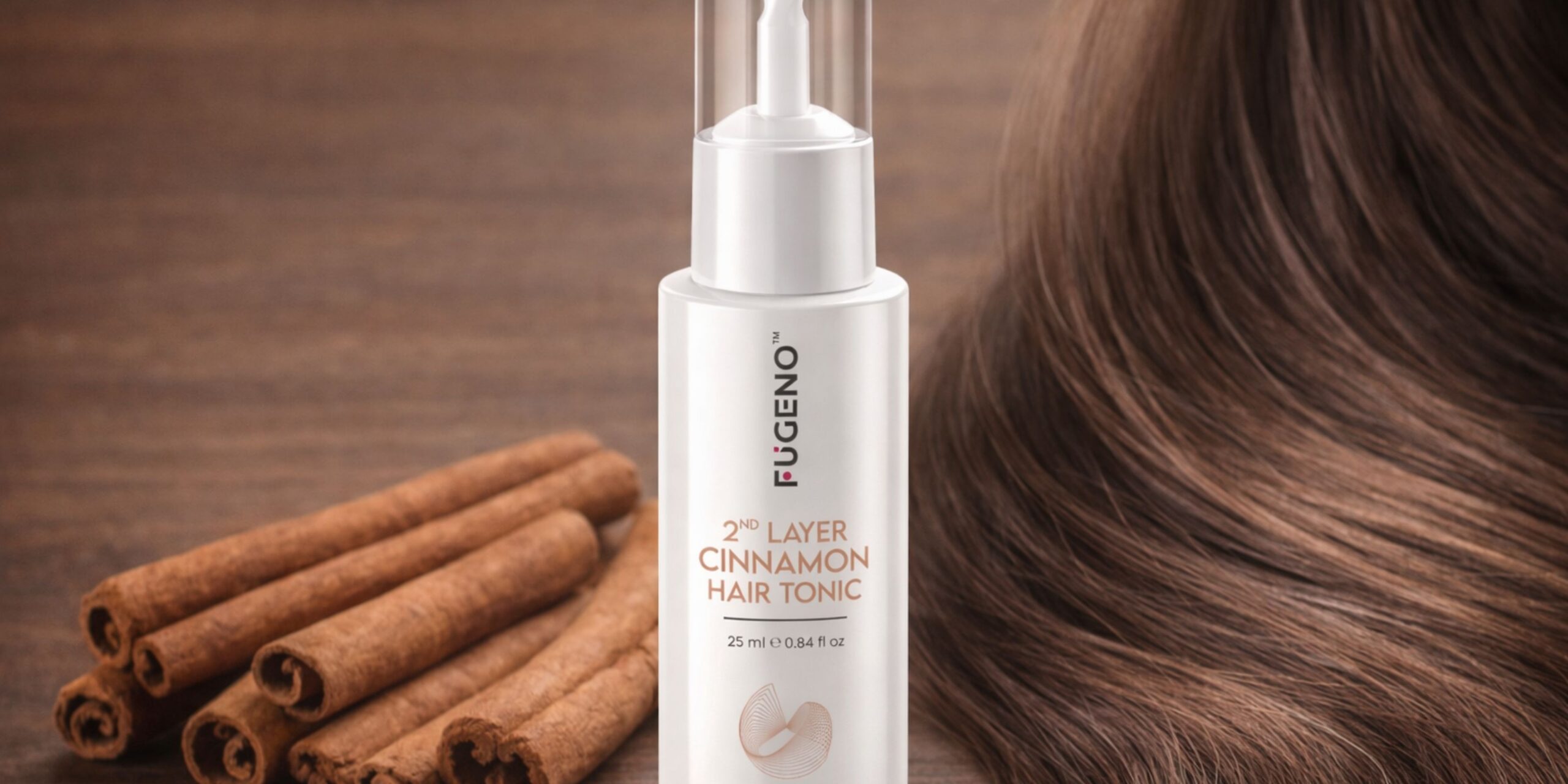
  1. Evening: Apply Fugeno Cinnamon Hair Tonic to scalp — massage for 5 minutes, leave overnight or for 1 hour before washing
  2. Morning: Wash hair with a sulfate-free shampoo
  3. Post-wash: Apply 2–3 pumps of Fugeno Instant Hair Spray on damp hair for frizz control and a light finish
  4. Weekly: Deep condition with a herbal hair mask (Amla + yoghurt + honey)

This layered approach gives you the immediate smoothness of a hair spray with the long-term, structural benefits of an Ayurvedic tonic.

Key Ingredients in Fugeno Cinnamon Hair Tonic

  • Cinnamon Bark Extract — Boosts scalp circulation, stimulating follicle activity and hair growth
  • Bhringraj — The Ayurvedic ‘King of Hair’ — reduces fall, thickens strands, prevents premature greying
  • Brahmi — Strengthens hair roots, calms scalp inflammation
  • Amla (Indian Gooseberry) — Highest natural source of Vitamin C; strengthens keratin structure
  • Neem — Antifungal, eliminates dandruff-causing Malassezia without harsh chemicals

Fugeno Cinnamon Hair Tonic + Instant Hair Spray

Price: Starting from ₹449 Key Ingredients: Cinnamon Bark, Bhringraj, Brahmi, Amla, Neem — Free from Silicones and Parabens

Frequently Asked Questions

Q: Can I use Ayurvedic hair tonic every day?

A: Most Ayurvedic hair tonics are safe for daily scalp application. However, if the formulation contains carrier oils, applying 3–4 times a week is more practical to avoid product buildup. Fugeno Cinnamon Hair Tonic is a lightweight, non-greasy formula that can be applied daily to the scalp without residue.

Q: How long does it take for a hair tonic to show results?

A: Ayurvedic hair tonics work at the follicular level — the average hair growth cycle is 6–8 weeks. Most users begin to see reduced hair fall within 3–4 weeks and visible improvement in hair thickness by 8–12 weeks of consistent use.

Q: What is the best hair spray for frizz in Indian humidity?

A: Look for a lightweight, alcohol-free formula with natural holding agents. Fugeno’s Instant Hair Spray uses plant-based polymers and Ayurvedic herbs to control frizz without the drying effect of alcohol-based commercial sprays. It’s safe for daily use.

Q: Can Ayurvedic treatments reverse hair fall?

A: Ayurvedic treatments can significantly reduce hair fall caused by scalp inflammation, poor circulation, nutritional deficiency, and stress — which together account for the majority of non-genetic hair fall cases in India. For follicles that are still active, consistent Ayurvedic treatment can absolutely reverse the trend.

Q: Is cinnamon good for hair growth?

A: Yes. Cinnamon bark extract is a vasodilator — it increases blood circulation to the scalp, which delivers more oxygen and nutrients to hair follicles. Studies have shown it can boost hair growth by up to 46% in follicles experiencing circulation-related dormancy. This is the key active in Fugeno’s Cinnamon Hair Tonic.