
That 'Natural' Cream You Love Might Not Be as Clean as You Think
You pick up a bottle that says ‘Natural’, ‘Herbal’, or ‘Plant-Based’. The packaging is earthy green. There might be a leaf on the label. And you feel good about buying it. But then you flip it over, squint at the ingredient list, and see… Methylparaben. Sodium Lauryl Sulfate. Parfum. Suddenly, it doesn’t look so natural anymore.
Here’s the hard truth: in India, the terms ‘natural’, ‘herbal’, and ‘chemical-free’ are completely unregulated. Any brand can print them on packaging without a single certification. A 2024 study by the Consumer Guidance Society of India found that over 52% of products marketed as ‘natural’ in Indian markets contained at least one synthetic preservative or surfactant that many consider harmful.
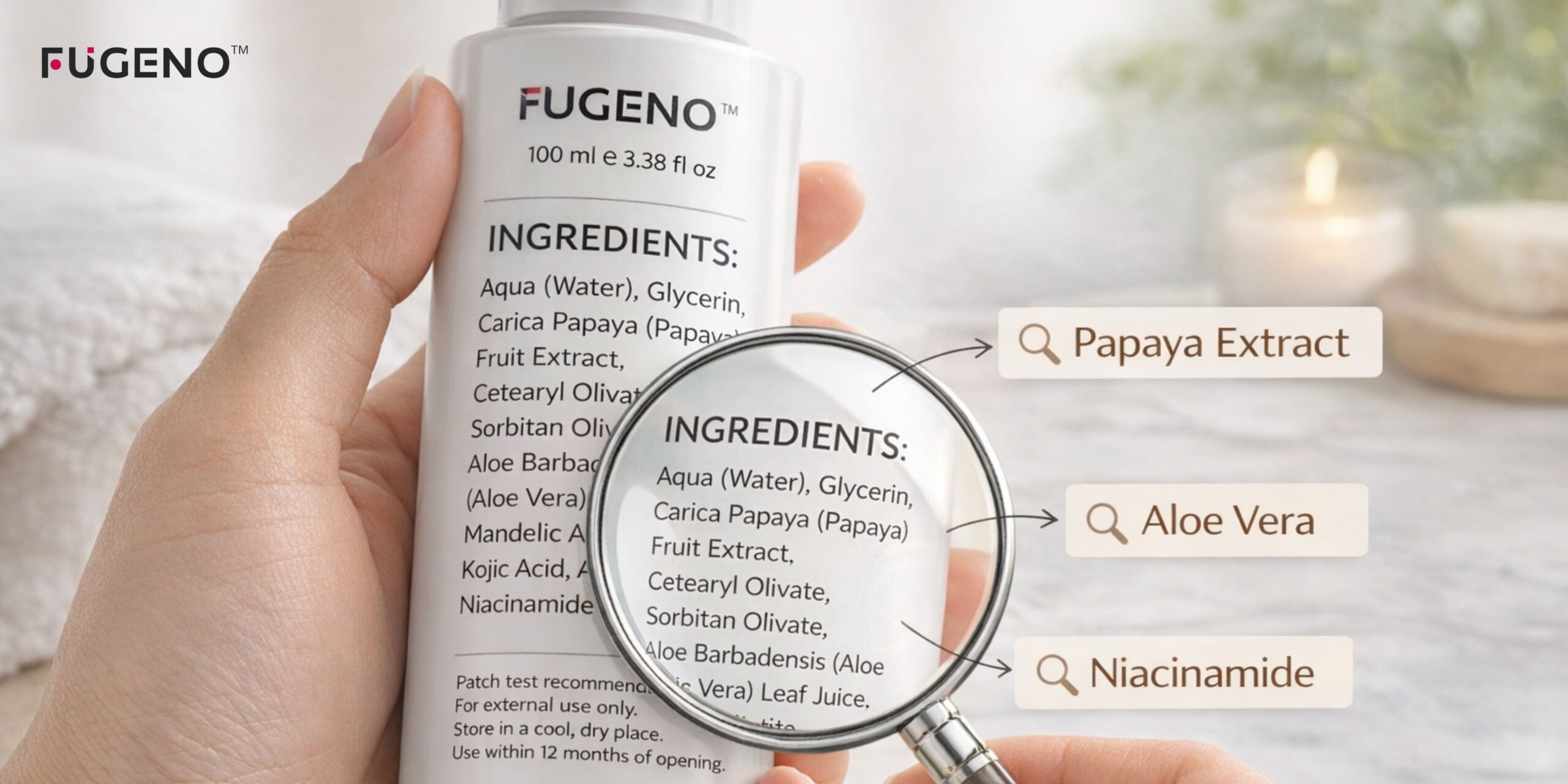
This guide is your no-nonsense, ingredient-by-ingredient checklist to finally read skincare labels like a pro — and choose products that are actually clean
“The first five ingredients make up roughly 80% of a product. If you see water followed by a synthetic chemical in the top five, that product is not as natural as it claims.”
The Science of Ingredient Transparency
Cosmetic ingredient lists in India follow INCI (International Nomenclature of Cosmetic Ingredients) standards — which means ingredients are listed in Latin or chemical names, in descending order of concentration. This sounds complicated, but once you know the key names to look for (and avoid), reading a label takes less than 30 seconds.
The EU Cosmetics Regulation bans over 1,300 ingredients from skincare products — the US bans fewer than 30. India’s regulations fall somewhere in between, which means the onus is largely on consumers to make informed choices. Dermatologists increasingly recommend that patients with sensitive or reactive skin in India’s hot, humid climate avoid a core group of synthetic chemicals that are known irritants and endocrine disruptors.
Ayurvedic philosophy aligns perfectly here: the principle of Ahimsa (non-harm) extends to what you put on your body. Choosing ingredient-transparent, clean formulations is both an ancient wisdom and a modern health imperative.
The Chemical-Free Skincare Checklist: What to Avoid & What to Embrace
RED FLAG Ingredients — Always Avoid
Memorise these names. If you see them in the first half of the ingredient list, put the product back.
- Parabens (Methylparaben, Propylparaben, Butylparaben) — Synthetic preservatives linked to hormonal disruption. Widely used in Indian drugstore products.
- Sodium Lauryl Sulfate (SLS) / Sodium Laureth Sulfate (SLES) — Harsh foaming agents that strip the skin’s natural oils. Common in face washes and body washes.
- Artificial Fragrance / Parfum — A catch-all term that can hide hundreds of undisclosed synthetic chemicals. One of the top causes of contact dermatitis in India.
- Formaldehyde-releasing preservatives (DMDM Hydantoin, Imidazolidinyl Urea) — Release small amounts of formaldehyde over time. Classified as potential carcinogens.
- Hydroquinone — Used in fairness creams for skin lightening. Linked to skin damage with long-term use. Banned in the EU, still legal in India.
- Mineral Oil / Paraffinum Liquidum — Petroleum byproduct. Clogs pores, especially problematic in India’s humid climate.
- Phthalates (DBP, DEHP) — Often hidden in ‘fragrance’. Endocrine disruptors with documented hormonal effects.
GREEN LIGHT Ingredients — Look for These
These are markers of a genuinely clean, effective formulation:
- Aloe Barbadensis Leaf Juice (Aloe Vera) — Natural humectant, cooling, and anti-inflammatory
- Rosa Damascena (Rose) Water — Natural toner and hydrator with a beautiful scent from actual roses
- Santalum Album (Sandalwood) Oil — Cooling, anti-inflammatory, skin-brightening
- Azadirachta Indica (Neem) — Antibacterial, antifungal; essential for Indian skin
- Curcuma Longa (Turmeric) — Anti-inflammatory, antioxidant, helps with hyperpigmentation
- Tocopherol (Natural Vitamin E) — Antioxidant that protects skin from UV damage
- Glycerin (Vegetable-derived) — Safe, effective humectant that draws moisture into the skin
- Sodium Benzoate + Potassium Sorbate — Clean preservative system; safe and effective
How to Read a Label in Under 30 Seconds
Follow this sequence every time you pick up a new product:
- Read the first 5 ingredients — they make up most of the product
- Scan for any RED FLAG ingredients from the list above
- Check for certifications: ECOCERT, India Organic, Leaping Bunny (cruelty-free)
- If you see ‘Parfum’ or ‘Fragrance’ without further detail — that’s a red flag
- Google any ingredient you do not recognise at ewg.org/skindeep for a safety rating
What ‘Organic’, ‘Natural’ and ‘Herbal’ Actually Mean (In India)
Natural:No legal definition in India. Any brand can use this word.
Herbal:Implies plant-based ingredients, but no certification required. Can still contain synthetic additives.
Organic:Meaningful ONLY when paired with a certification (USDA Organic, India Organic, ECOCERT). Without a certification badge, it is just marketing.
Ayurvedic:Must follow AYUSH Ministry guidelines and be registered. This is actually one of the more regulated claims in India.
Fugeno’s Ingredient Transparency Promise
Every Fugeno product lists 100% of its ingredients in plain English alongside the INCI name — so you always know exactly what you are putting on your skin. All Fugeno formulations are free from parabens, SLS, artificial fragrances, mineral oil, and formaldehyde-releasing preservatives. Every batch is third-party tested and the results are available on request.

All Fugeno Products
Price: Starting from ₹299 Key Ingredients: Aloe Vera, Neem, Turmeric, Sandalwood, Natural Vitamin E — NO Parabens, NO SLS, NO Artificial Fragrance
Frequently Asked Questions
Q: What does ‘chemical-free’ really mean on skincare labels?
A: Technically, everything is made of chemicals — even water. When brands say ‘chemical-free,’ they usually mean free from harmful synthetic chemicals like parabens, sulfates, and artificial fragrances. Look for labels that specify which harmful ingredients are excluded, rather than vague blanket claims. Better yet, look for third-party certified products.
Q: Which chemicals should I avoid in Indian skincare products?
A: The key ones to avoid: parabens (methylparaben, propylparaben), sodium lauryl sulfate (SLS), artificial fragrances listed as ‘parfum’, formaldehyde-releasing preservatives like DMDM Hydantoin, and hydroquinone. These are particularly problematic for Indian skin types in hot, humid climates.
Q: Are natural skincare brands in India actually effective?
A: Yes — Ayurvedic and natural formulations have centuries of proven efficacy. Ingredients like turmeric, neem, ashwagandha, and saffron have documented anti-inflammatory and antioxidant properties backed by modern research. Brands like Fugeno combine traditional wisdom with clean formulation standards and third-party testing.
Q: How do I know if an ‘organic’ product is genuine?
A: Look for certifications: USDA Organic, ECOCERT, or India Organic printed on packaging. Genuine organic products will list the percentage of organic ingredients. Be wary of ‘natural’ claims without any certification — they are entirely unregulated in India.
Q: Can chemical-free skincare work for oily and acne-prone skin?
A: Absolutely. Natural ingredients like neem (antibacterial), tea tree, tulsi, and plant-derived salicylic acid are highly effective for oily and acne-prone skin without the irritation caused by synthetic chemicals. Many people find their skin actually improves significantly after switching to clean beauty.

