
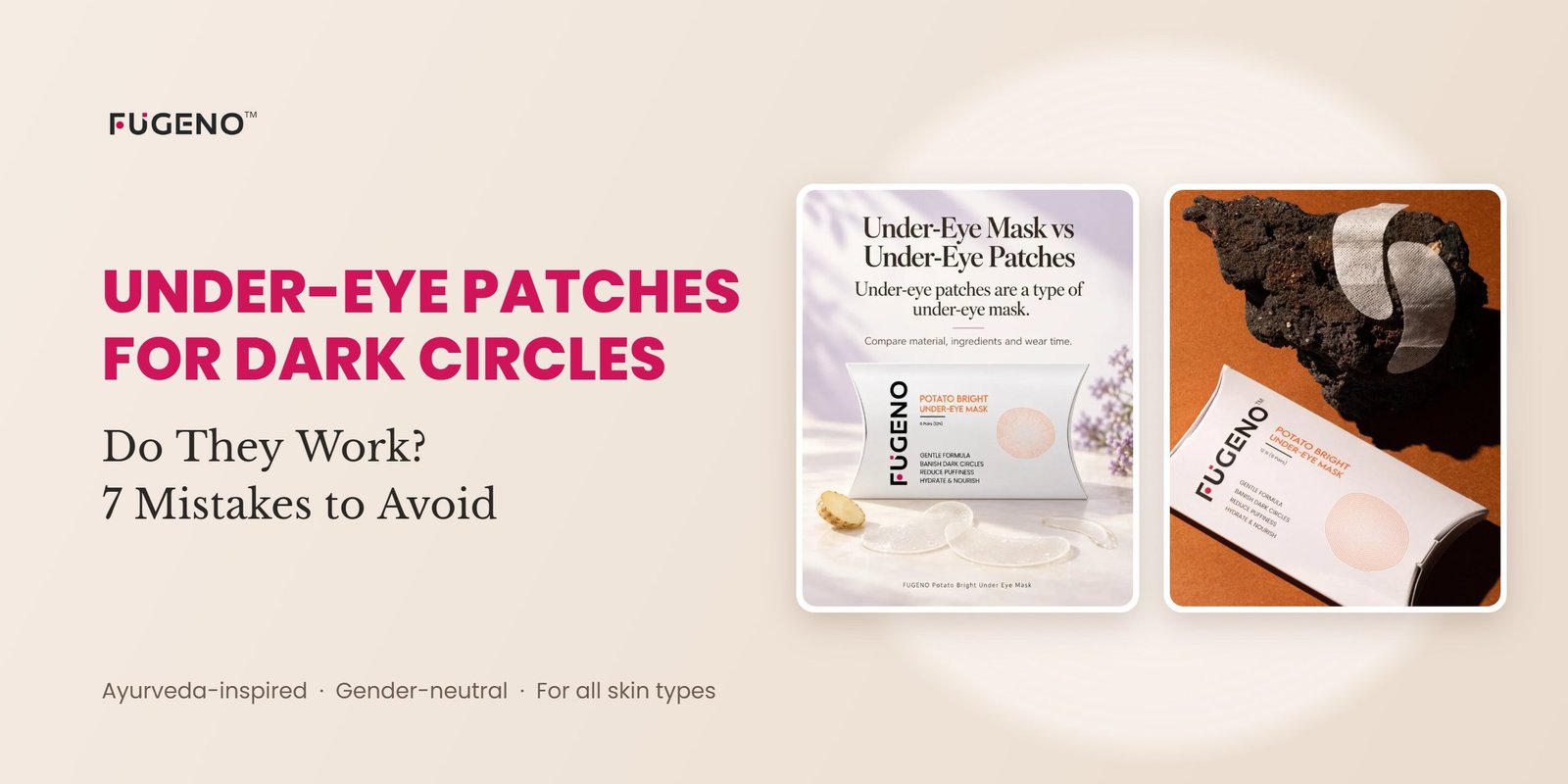
Quick answer: Under-eye patches for dark circles can make tired eyes look brighter, smoother and less puffy for a while, mostly by hydrating and cooling the thin under-eye skin. They work best on shadows from tiredness, dehydration and puffiness. They can’t remove dark circles caused by genetics, deep-set eyes or pigmentation. For best results, choose patches with hydrating and brightening ingredients like hyaluronic acid and niacinamide, use them 2 to 3 times a week, and pair them with daily sunscreen and enough sleep.

Our pick
FUGENO Potato Bright Under-Eye Mask – 6 pairs
Biocellulose under-eye patches with potato and papaya extracts, niacinamide and sodium hyaluronate. Hydrates, de-puffs and helps tired eyes look brighter.
Original price was: ₹624.00.₹549.00Current price is: ₹549.00.Add to cart
See ingredients and details →This guide to under-eye patches for dark circles covers what they are, what they can and can’t do for dark circles, what potato actually does under the eyes, how to choose and use patches, and how they compare with other under-eye masks.
Table of Contents
What Are Under-Eye Patches?
Under-eye patches are small, crescent-shaped pads soaked in a serum. You place them on the skin under your eyes for 15 to 30 minutes so the serum can sink in. The patch holds the liquid against your skin and slows evaporation, which is why they hydrate better than simply patting on a serum.
They come in three main materials:
- Hydrogel: a jelly-like patch, often cooling.
- Biocellulose: a fine natural fibre mesh that clings closely to the skin and holds a lot of serum.
- Sheet or cotton: thinner and cheaper, but tends to slip and dry out faster.

Do Under-Eye Patches Help With Dark Circles?
Yes, under-eye patches for dark circles can help, but mainly with the type caused by tiredness, dehydration and puffiness. The effect is cosmetic and cumulative. They make the area look fresher and more even. They don’t change the structure of your face or erase genetic pigment.
To set expectations, it helps to know that dark circles have several causes. A review in the Journal of Clinical and Aesthetic Dermatology lists genetics, excess pigment, visible blood vessels under thin skin, shadowing from hollows, fluid build-up and sun exposure. Mount Sinai also notes that genetics is the most common cause.

| Type of dark circle | What it looks like | Can patches help? |
|---|---|---|
| Tired or dehydrated | Dull, crepey, worse in the morning | Yes, often noticeably |
| Puffy | Swollen bags casting a shadow | Yes, especially if chilled |
| Vascular (bluish) | Blue or purple tint through thin skin | A little, by hydrating and plumping the skin |
| Pigmented (brownish) | Brown, even when rested | Slowly and partly, with brightening ingredients plus daily sunscreen |
| Structural (hollows) | Shadow from deep-set eyes | No, a patch can’t change bone or fat structure |
Potato for Under-Eye Care: What Does It Do?
Placing cold potato slices on the eyes is an old home remedy in India and elsewhere. Much of the effect comes from the cold, which temporarily reduces puffiness. Potato also contains starch and vitamin C, which is why potato extract shows up in under-eye products aimed at a brighter look.
Be careful with exaggerated promises. Potato extract is a supportive ingredient, not a cure for dark circles. In a well-formulated patch, it works alongside ingredients with more research behind them, like niacinamide and hyaluronic acid. And unlike a raw slice, a patch is clean, stays in place and doesn’t drip.
Benefits of Under-Eye Patches for Dark Circles
When they’re used regularly and with the right expectations, under-eye patches for dark circles offer some real advantages over creams alone:
- Better hydration. The patch keeps serum in contact with the skin for 15 to 30 minutes, instead of a few seconds.
- Visible de-puffing. A cool patch, especially one chilled in the fridge, reduces morning swelling.
- A smoother look. Hydrated skin makes fine dehydration lines less noticeable.
- Brighter-looking skin. Ingredients like niacinamide support a more even tone with repeated use.
- Makeup sits better. Concealer creases less on hydrated under-eye skin.
- A ritual you’ll stick to. Fifteen minutes with patches is an easy habit, and consistency is what drives results.
7 Mistakes That Stop Under-Eye Patches From Working
- Applying on dirty or oily skin. The patch won’t cling and the serum can’t absorb well.
- Placing them too close to the lash line. Serum can get into your eyes. Keep them on the bone.
- Leaving them on for an hour. Once a patch dries out, it can start pulling moisture back.
- Washing off the leftover serum. Pat it in instead. That’s part of the treatment.
- Skipping sunscreen. UV exposure undoes brightening progress.
- Using them once and giving up. Under-eye patches for dark circles work cumulatively. Give them 4 to 6 weeks.
- Expecting them to fix structural shadows. Hollows and deep-set eyes need a different solution, such as concealer or an in-clinic treatment.
Under-Eye Patches for Different Lifestyles
Students and night owls: chilled patches the morning after a late night are the fastest fix for a tired look.
Desk and screen workers: use patches during a mid-afternoon break, two or three times a week, alongside the 20-20-20 screen rule (every 20 minutes, look 20 feet away for 20 seconds).
Frequent travellers: flights dry out the skin. A pair of patches during the flight, plus a few sprays of face mist, helps you land looking rested.
Before events: apply patches 30 minutes before makeup so concealer goes on smoothly.
How to Choose Under-Eye Patches
Use this checklist when you compare under-eye patches for dark circles:
- Hydrating base: hyaluronic acid (sodium hyaluronate), glycerin or aloe vera.
- A brightening ingredient: niacinamide is one of the better studied. Vitamin C derivatives and botanical extracts like potato and papaya are supportive.
- A material that stays put: biocellulose and hydrogel cling better than paper sheets.
- Fragrance and preservatives: the under-eye skin is the thinnest on the face. If you react easily, check the label for added fragrance and isothiazolinone preservatives.
- Price per use: divide the price by the number of pairs to compare fairly.
Choosing Under-Eye Patches for Your Skin Type
Dry skin: look for a rich hydrating serum with hyaluronic acid and glycerin, and follow with an eye cream. Biocellulose patches suit dry skin well because they hold more serum.
Oily or combination skin: the under-eye area rarely gets oily, but heavy eye creams can cause milia (tiny white bumps). A light, water-based patch serum is a good alternative to a thick cream.
Sensitive skin: choose fragrance-free formulas if you can, and patch test on your jawline before using near the eyes. Check for preservatives you know you react to.
Mature skin: hydration makes fine lines less visible, so under-eye patches for dark circles and dryness work well as a pre-makeup step. Pair with daily sunscreen to protect against further UV damage.
Dark Circles vs Puffiness: What’s the Difference?
They often show up together, but they’re different problems. Dark circles are a change in colour or shadow under the eye. Puffiness is swelling from fluid build-up. Puffiness is usually worse in the morning and after salty food, alcohol or crying, and it settles during the day. Dark circles tend to stay the same all day.
Cold is the fastest fix for puffiness, which is why chilled under-eye patches help so much in the morning. For dark circles, the slower routine of hydration, brightening ingredients and daily sunscreen matters more. Under-eye patches for dark circles can work on both at once when they’re chilled and contain ingredients like niacinamide.
A Weekly Under-Eye Routine
- Every morning: gentle cleanse, light eye cream or moisturiser, sunscreen up to the under-eye area.
- Every evening: remove makeup gently without rubbing, then moisturise.
- Two to three times a week: under-eye patches for 15 to 20 minutes, ideally chilled, then pat in the serum.
- Before events: one extra round of patches 30 minutes before makeup.
- Every day: screen breaks, enough water and, if you can, seven to eight hours of sleep.
How to Use Under-Eye Patches
Apply under-eye patches to clean, dry skin, leave them on for 15 to 20 minutes (up to 30), then remove them and gently pat the leftover serum into the skin. Don’t rinse it off.

- Cleanse your face and pat it dry.
- Optional: chill the pack in the fridge for 10 minutes. This makes a real difference to morning puffiness.
- Place each patch with the curved edge following the bone under your eye, not too close to the lash line.
- Press gently so it sits flat with no air bubbles.
- Relax for 15 to 20 minutes. Lie back if you can, which keeps the patches from sliding.
- Remove and pat in the remaining serum with your ring finger.
- Follow with eye cream or moisturiser, and sunscreen in the daytime.

How Often Should You Use Under-Eye Patches?
For under-eye patches for dark circles, two to three times a week works for most people. Use them more on demand: before an event, after a late night or a long flight. Using them every day won’t speed up results, and constant moisture can make sensitive skin feel irritated.
Under-Eye Mask vs Under-Eye Patches
The terms are often used interchangeably. Under-eye patches are a type of under-eye mask. The useful comparison is between materials and formats.

| Biocellulose patches | Hydrogel patches | Cream or gel eye mask | |
|---|---|---|---|
| Feel | Thin, close-fitting | Jelly-like, cooling | Spread on like a cream |
| Serum delivery | High; holds a lot of serum | Medium | Depends on formula |
| Stays in place | Very well | Well, may slide | N/A |
| Best for | Hydration and brightening boost | Quick de-puffing | Overnight care |
For more background on eye masks in general, see our article on the benefits of using eye masks regularly.
Daily Habits That Make Patches Work Better
- Sunscreen every day, applied gently up to the under-eye area. UV exposure can deepen pigment.
- Don’t rub your eyes. Rubbing irritates the skin and can darken it over time. Treat allergies if they make you rub.
- Sleep and screen breaks. They won’t erase genetic circles, but they reduce the tired look.
- Sleep with your head slightly raised if you wake up puffy.
- Hydrate the whole face. A face mist like the FUGENO Instant Face Mist is a quick refresh between patch days.
If you’re building a full routine, our guide on an eye care routine for tired eyes and the Ayurvedic skincare routine article are good next reads.
When Patches Aren’t Enough: Concealer and In-Clinic Options
Under-eye patches for dark circles are a home-care tool. For circles that are mostly structural or deeply pigmented, these options can help alongside them:
- Colour-correcting concealer. A peach or orange corrector cancels blue and purple tones on deeper Indian skin tones. Apply a thin layer after patches, when the skin is smooth and hydrated.
- Prescription topicals. A dermatologist may suggest stronger brightening creams for pigment-related circles. Don’t use strong actives near the eyes without guidance.
- In-clinic treatments. Chemical peels, lasers and fillers for hollows are options for some people. They need a qualified dermatologist and a proper consultation.
Even with these treatments, daily sunscreen, gentle handling and hydration remain the base of any under-eye routine. Patches fit neatly into that base as a regular boost.
What to Check on the Label
Before you buy any under-eye mask, take 30 seconds to read the ingredient list. Look for a humectant (sodium hyaluronate, glycerin or aloe) in the first few ingredients, and a brightening ingredient like niacinamide. Check the number of pairs and the wear time on the pack. If you know you react to fragrance or specific preservatives, check for them by name. A clear, complete ingredient list is also a good sign that a brand is being honest with you.
FUGENO Potato Bright Under-Eye Mask
We designed the FUGENO Potato Bright Under-Eye Mask as biocellulose under-eye patches for dark circles caused by tiredness, puffiness and dehydration. The serum combines potato and papaya extracts with niacinamide and sodium hyaluronate. It’s for men and women and all skin types.
| Product facts: FUGENO Potato Bright Under-Eye Mask | |
|---|---|
| Format | Biocellulose under-eye patches, 12 patches (6 pairs) |
| Key ingredients | Potato extract, papaya extract, niacinamide, sodium hyaluronate, aloe vera extract, glycerin |
| Main uses | Brighter-looking, hydrated, less puffy under-eyes |
| How to use | On clean skin for 15 to 20 minutes (up to 30), 2 to 3 times a week; pat in leftover serum |
| Note | Contains fragrance and isothiazolinone preservatives; patch test if you are sensitive |
Read 5 reasons to add the Potato Bright Under-Eye Mask to your routine, or our older guide on choosing under-eye patches for your skin type. You can also browse all Fugeno eye care.
Shop the routine
FUGENO Potato Bright Under-Eye Mask – 6 pairs
Ready to give tired eyes a 20-minute refresh? Try the FUGENO Potato Bright Under-Eye Mask.
Original price was: ₹624.00.₹549.00Current price is: ₹549.00.Add to cart
See ingredients and details →Under-Eye Patches FAQs
Do under eye patches really work for dark circles?
They work for dark circles caused by tiredness, dehydration and puffiness, making the area look brighter and smoother. They can’t remove circles caused by genetics, deep-set eyes or bone structure, and they help only slowly with pigment-related circles.
How long should I leave under-eye patches on?
Usually 15 to 20 minutes, and up to 30 minutes for biocellulose patches. Follow the pack instructions. Leaving them on until they dry out doesn’t add benefit.
How often should I use under-eye patches?
Two to three times a week for regular care, plus extra use before events or after a late night. Daily use won’t speed up results.
Should I wash my face after using eye patches?
No. Remove the patches and gently pat the leftover serum into the skin. Then apply eye cream or moisturiser, and sunscreen in the daytime.
Can I reuse under-eye patches?
No. Once used, a patch has given up most of its serum and has been in contact with your skin, so reusing it isn’t hygienic or effective.
Are potato eye masks good for dark circles?
Potato extract is a supportive ingredient and the cooling effect helps puffiness. A potato eye mask works best when it also contains studied ingredients like niacinamide and hyaluronic acid.
Can men use under-eye patches?
Yes. Under-eye patches work the same way on all skin. The FUGENO Potato Bright Under-Eye Mask is made for men and women.
When should I see a doctor about dark circles?
See a dermatologist if dark circles appear suddenly, affect only one eye, come with swelling or itching that won’t settle, or don’t change at all with good sleep, sunscreen and regular care.
[…] reading: do under-eye patches for dark circles really work? Here’s which dark circles they help, how to use them and the mistakes to […]